

Prevent Frizzy Hair While Sleeping: 7 Steps
Table of Contents
- Why Hair Gets Frizzy Overnight
- Step 1: Choose the Best Pillowcase for Frizzy Hair
- Step 2: How to Wrap Hair for Sleeping
- Step 3: How to Maintain Curls Overnight
- Step 4: Use Sealants and Overnight Treatments
- Step 5: Manage Sleep Position and Friction
- Step 6: Address Humidity and Climate
- Step 7: Morning Routine to Refresh Your Style
- Frequently Asked Questions
Last Updated: September 3, 2026
Why Hair Gets Frizzy Overnight
Frizz forms when friction lifts your hair's cuticles and moisture loss leaves them unsealed. During sleep, friction from pillowcases, tossing, and pressure causes cuticles to lift and scatter light unevenly. High-porosity hair absorbs moisture readily but loses it just as quickly, leaving raised cuticles unsealed by morning (peer-reviewed research). Humidity compounds the issue by causing the hair shaft to swell unevenly, intensifying frizz (peer-reviewed research).
Step 1: Choose the Best Pillowcase for Frizzy Hair
Your pillowcase directly determines how much friction your hair experiences and how much moisture it retains. Cotton and polyester have rough surface textures that grab and pull at hair strands throughout the night, causing cuticles to lift and leading to breakage and permanent frizz over time.
Satin and silk pillowcases solve this by reducing friction dramatically. Their smooth surface allows hair to glide rather than catch and tangle, preventing significant overnight damage while helping hair retain moisture.
Satin vs. Silk: Which Material Works Best
Silk is the gold standard for hair protection, naturally smooth, breathable, and reducing friction to nearly zero. It doesn't absorb water the way cotton does, helping hair retain moisture.
Satin delivers nearly identical benefits at a lower price point. High-quality polyester satin provides the same friction reduction as silk with excellent moisture retention, greater durability, and easier maintenance. For most people, premium satin pillowcases offer the best balance of performance and value.
Fearce LuxeWrap™ uses High-quality, organic satin in both pillowcases and headwraps, chosen specifically for its ability to minimize friction while maintaining breathability throughout the night.
Why Cotton and Polyester Cause Friction
Cotton's twisted, irregular fiber structure catches hair, while polyester's textured surface grabs at cuticles (peer-reviewed research). Both materials absorb moisture from your hair, accelerating dehydration overnight. This friction-and-dehydration combination is why people with curly, coily, or textured hair often wake with significantly more frizz after sleeping on cotton.
Step 2: How to Wrap Hair for Sleeping
Wrapping your hair before bed is one of the most effective techniques for preventing frizz and maintaining your style overnight. Different hair types benefit from different wrapping methods.
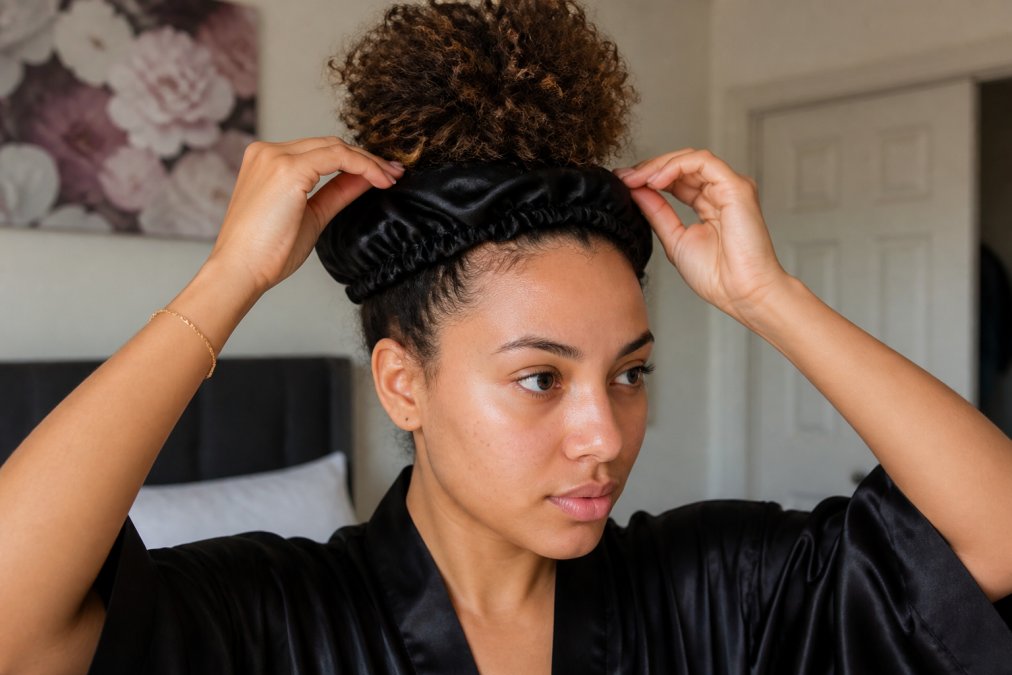
The Pineapple Method for Curly Hair
The pineapple method preserves curl pattern overnight by gathering hair loosely on top of your head and securing it with a soft elastic or satin bonnet. After styling, use a wide hair elastic to gather hair at the crown, loose enough that you're not creating tension or pulling curls out of shape. Cover with a satin bonnet to keep curls protected from friction while the elevated position prevents compression against the pillow.
Braiding and Protective Styling Options
Braiding keeps hair contained and prevents tangling while reducing friction. Create one or two loose braids depending on hair length and thickness, tight braids create tension and breakage. After braiding, wrap in a satin bonnet or cover with a satin scarf for excellent overnight protection.
For very curly or coily hair, braid while damp with leave-in conditioner and allow to air dry in the braids. This "braid-out" technique creates defined curls while protecting hair from friction overnight.
Step 3: How to Maintain Curls Overnight
Maintaining curl pattern overnight requires proper product selection and understanding your hair's porosity, how readily it absorbs and releases moisture.
Leave-In Conditioner and Hydration Before Bed
Apply leave-in conditioner to damp hair, focusing on mid-lengths and ends where frizz is most likely. Your hair should feel moisturized and slightly damp, not soaking. Leave-in conditioner maintains moisture levels, prevents dehydration, and helps seal cuticles flat, resulting in curls that hold definition without a frizzy halo.
Hair Porosity and Product Selection
Your hair's porosity determines which products work best. High-porosity hair absorbs moisture quickly but releases it quickly, requiring heavier leave-in conditioners and sealants. Low-porosity hair resists moisture absorption, so lighter, more penetrating products work better.
Test porosity by dropping a clean hair strand into water: if it sinks immediately, your hair is high-porosity; if it floats, it's low-porosity; if it sinks slowly, it's normal porosity. Understanding your porosity helps prevent frizz by working with your hair's natural tendencies rather than against them.
Step 4: Use Sealants and Overnight Treatments
After applying leave-in conditioner, seal your hair with an oil or serum to lock in moisture. Apply sealant to damp hair using a light hand, focusing on mid-lengths and ends. Good options include argan oil, coconut oil, jojoba oil, or lightweight hair serums.
Some people prefer heavier overnight treatments designed specifically for nighttime use, combining conditioning ingredients with oils and humectants. Apply to damp hair before wrapping and leave in overnight for significantly more hydration and frizz prevention.
Step 5: Manage Sleep Position and Friction
Your sleep position affects friction levels overnight. Side sleepers and stomach sleepers create more friction because their head is in constant contact with the pillow. Back sleepers experience less friction but still need protection.
Side sleepers should use a satin pillowcase combined with a Fearce Luxe Satin wrap for double-layer protection. Stomach sleepers need the same approach with added urgency. Back sleepers benefit from a satin pillowcase and bonnet, though they have an advantage with less hair-to-pillow contact.
Fearce LuxeWrap™ is designed to stay secure throughout the night with non-slip grip, ensuring your wrap doesn't slide off regardless of sleep position.
Step 6: Address Humidity and Climate
Humidity causes hair to absorb moisture from the air, swelling the hair shaft unevenly and lifting cuticles. In humid climates, apply heavier leave-in conditioner and sealant oil, use a snug-fitting bonnet to minimize air circulation, and consider a silk or satin sleep cap under a bonnet for extra protection.
In dry climates, hair loses moisture too quickly, requiring richer conditioners and more frequent deep conditioning. A sealant oil is essential to prevent moisture evaporation overnight. Adjust your routine based on local climate and how your hair behaves overnight.
Step 7: Morning Routine to Refresh Your Style
When removing your bonnet or wrap, don't immediately run your fingers through your hair. Gently separate with your fingers or a wide-tooth comb, starting at the ends. Mist curls lightly with water or curl refresher spray to reactivate styling products and allow to air dry slightly.
Avoid excessive touching in the morning, every manipulation risks disrupting curl pattern and creating frizz. If frizz appears, use a small amount of smoothing serum on affected areas only, applied with fingertips and smoothed gently.
Overnight Hair Protection Method |
Best For |
Key Benefit |
Time Required |
|---|---|---|---|
Fearce Luxe Satin pillowcase |
All hair types |
Reduces friction and moisture loss |
No extra time |
Pineapple method + bonnet |
Curly and coily hair |
Preserves curl pattern and definition |
2-3 minutes |
Braiding + Fearce Luxe satin wrap |
Longer hair, all textures |
Prevents tangling and frizz |
5 minutes |
Leave-in conditioner + sealant oil |
All hair types, especially high-porosity |
Maintains hydration overnight |
3-5 minutes |
Fearce Luxe wrap with cooling gel |
Short pixies, all hair types |
Regulates temperature while protecting |
2 minutes |
Preventing frizzy hair while sleeping comes down to three principles: minimize friction, maintain hydration, and protect your hair's cuticles. The most effective approach combines multiple strategies, a satin pillowcase, protective wrap, and appropriate products for your hair's porosity and climate.
Fearce LuxeWrap™ combines several elements in one product. Our satin headwraps feature non-slip grip for secure overnight wear, cooling gel lining for temperature regulation, and premium organic satin that minimizes friction. Start with one or two strategies from this guide and add more as you discover what works best for your hair type and climate. Consistency is what creates results.
Frequently Asked Questions
Why does my hair get frizzy after sleeping?
Hair gets frizzy overnight because cotton pillowcases create friction against your hair shaft, disrupting the cuticle layer and causing moisture to escape. Cotton also absorbs moisture from your hair, leaving it dry and prone to frizz. Additionally, sleep position, humidity, and lack of protective styling all contribute to overnight frizz. Using a satin pillowcase and wrapping your hair significantly reduces friction and helps maintain moisture retention throughout the night.
Does a satin pillowcase actually prevent frizz?
Yes. Satin pillowcases reduce friction between your hair and the pillow, which minimizes cuticle disruption and breakage. Unlike cotton, satin doesn't absorb moisture from your hair, allowing it to maintain hydration and elasticity overnight. For best results, combine a satin pillowcase with protective styling techniques like the pineapple method or braiding, plus a leave-in conditioner or hair oil to lock in moisture before bed.
What's the best way to wrap hair for sleeping to prevent frizz?
The pineapple method works well for curly and textured hair: gather your hair loosely on top of your head and secure it with a silk or satin bonnet or hair wrap. For straight or wavy hair, try loose braids or a low ponytail. A satin bonnet with a non-slip grip strip keeps your protective style secure all night without slipping off. Avoid tight wrapping, which can cause breakage and scalp tension. The goal is to minimize friction while maintaining curl definition and moisture.
How can I maintain curls overnight without frizz?
Apply a leave-in conditioner or smoothing serum to damp hair before bed to seal moisture into the hair shaft. Use the pineapple method to keep curls stacked and protected. Sleep on a satin pillowcase or bonnet to prevent friction-induced frizz. Consider your hair porosity: high-porosity hair needs heavier oils and sealants, while low-porosity hair benefits from lighter, water-based leave-in products. Store curls in braids or twists if you prefer extra definition, and mist lightly with water in the morning to refresh.
This article was written using GrandRanker